Prolonged sitting behind a computer screen creates a predictable biomechanical pattern in the human body. When you spend seven to nine hours a day typing, scrolling, and answering calls, the shoulders slowly creep toward the ears, the chest caves inward, and the head drifts forward of the torso. Over days and months, this posture places continuous isometric tension on the musculature between the shoulder blades and at the base of the neck, leading to an aching, burning tightness that rarely resolves on its own.
Relieving this chronic strain does not require dedicated gym machinery or hour-long workouts. Targeted stretching and active mobility work performed directly at your desk or on the floor can restore range of motion, improve blood circulation to oxygen-deprived tissues, and decompress the thoracic spine. By understanding the mechanical causes of upper back stiffness and practicing deliberate movements throughout the working day, you can interrupt the cycle of muscle fatigue before it turns into chronic pain.
Understanding Forward Head Posture and Muscle Fatigue
In a neutral anatomical alignment, the human head weighs between 10 and 12 pounds. The cervical spine supports this load with a gentle inward lordotic curve, distributing weight evenly through the vertebrae and surrounding muscular scaffolding. However, when you lean toward a computer monitor, every inch of forward displacement increases the relative load on the spinal column. At a forward tilt of roughly 30 degrees, the effective weight borne by the neck and upper back structures rises to nearly 40 pounds. At 45 degrees, that load reaches approximately 49 pounds.
This dramatic mechanical shift forces the muscles of the posterior chain into a state of continuous eccentric contraction. Instead of alternating between tension and relaxation as they do during movement, the rhomboids, middle trapezius, and levator scapulae must act as structural cables to prevent the head from falling further forward. This continuous contraction compresses local blood vessels, decreasing capillary blood flow and allowing cellular waste products to accumulate in the muscle tissue. The result is dull, persistent fatigue and ischemic muscle ache.
At the same time, the muscles on the anterior side of the torso shorten. The pectoralis major, pectoralis minor, and anterior deltoids tighten into an adapted short position, pulling the shoulder blades forward and outward around the rib cage. This muscular imbalance, known clinically as Upper Crossed Syndrome, reinforces the slumped position. The posterior back muscles are held in an overstretched, weakened state while the chest muscles become dense and restricted.
| Muscle Group | State During Desk Slumping | Mechanical Consequence |
|---|---|---|
| Pectoralis Major and Minor | Chronically shortened and stiff | Pulls shoulders forward; restricts rib expansion |
| Rhomboids and Mid Trapezius | Chronically lengthened and taut | Fatigues under continuous tension; develops trigger points |
| Levator Scapulae | Shortened and overloaded | Creates sharp neck-to-shoulder pain when turning head |
| Thoracic active vitality Spinae | Inhibited and weak | Loses ability to maintain an upright thoracic spine |
Thoracic Extension Over a Rolled Towel or Chair Back
The thoracic spine consists of 12 vertebrae (T1 through T12), which connect directly to your rib cage. This region naturally exhibits a slight outward curve, known as kyphosis. While this curve protects vital organs, prolonged desk work exaggerates it into an excessive, rigid flexion. Restoring thoracic extension is necessary because when the mid-back becomes stiff, the body compensates by over-extending the cervical spine or the lower lumbar spine, causing irritation at either end.
To mobilize the mid-back using an office chair, begin with a chair back extension. Choose a stable, non-rolling chair, or lock the wheels of your desk chair. Sit back fully so your sacrum is supported by the chair back. Interlace your fingers behind your head to support the weight of your skull, keeping your thumbs pointed downward along your neck. Draw your elbows slightly inward so they frame your peripheral vision. Inhale deeply, brace your abdominal muscles lightly to keep your lower back from arching, and gently lean backward over the upper rim of the chair back. Focus the bending sensation between your shoulder blades rather than in your waist. Hold this position for 5 to 8 seconds, exhale, and return to an upright position. Complete 5 repetitions, moving smoothly without bouncing.
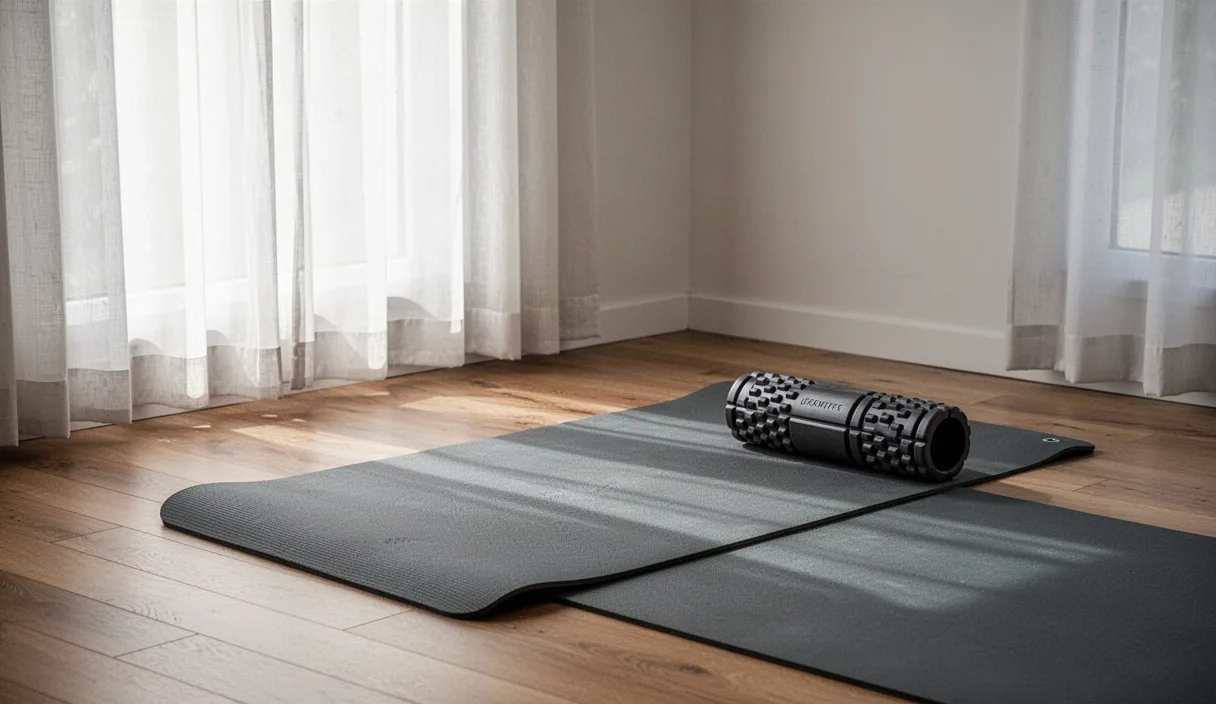
For a deeper, passive release on the floor, use a bath towel rolled tightly into a firm cylinder measuring roughly 3 to 4 inches in diameter.
- Position the towel roll: Lie on your back on a firm carpet or exercise mat, placing the rolled towel horizontally across the mat. Adjust your torso so the towel sits directly beneath the bottom tips of your shoulder blades, roughly across the middle of your bra line or heart level.
- Stabilize the hips and head: Bend your knees to 90 degrees with your feet flat on the floor, about hip-width apart. Rest your head back onto the mat. If your head tilts upward or your neck strains, place a thin book or yoga block under your head for support.
- Set arm position: Extend your arms outward into a goalpost or "T" shape, with the backs of your hands resting on the floor and elbows bent at 90 degrees.
- Breathe and hold: Stay in this position for 60 to 90 seconds. Focus on letting your rib cage sink downward toward the towel with every long exhalation. To release, roll onto your side and press yourself up with your hands rather than sitting up directly forward.
Scapular Retraction and Doorway Pec Stretches
Relieving tension in the upper back requires opening the front of the body. Under the neuromuscular principle of reciprocal inhibition, contracting one muscle group triggers a neurological signal that encourages the opposing muscle group to relax. When you stretch the tight chest muscles and actively contract the middle back muscles, you reduce the mechanical pull that holds your shoulders forward.
The doorway stretch provides an effective way to isolate the pectoral fibers without complex equipment. Stand in an open doorway. Raise your right arm and place your right forearm, from elbow to wrist, flat against the door frame. Your upper arm should form a 90-degree angle with your torso, with the elbow bent at 90 degrees. Step forward with your right leg into a shallow lunge until you feel a firm, comfortable stretch across the right side of your chest and front shoulder. Keep your abdominal muscles engaged to prevent your lumbar spine from arching to compensate. Hold the stretch for 25 to 30 seconds while breathing steadily. Switch legs and repeat on the left side. To target the lower fibers of the pectoralis major, adjust your forearm higher on the door frame, raising the elbow above shoulder height.
Follow the doorway stretch with an active scapular retraction exercise to engage the dormant rhomboids and middle trapezius muscles.
- Set starting posture: Sit or stand with a tall spine, dropping your shoulders away from your ears. Let your arms hang naturally at your sides with elbows bent at 90 degrees and palms facing inward toward each other.
- Execute the pinch: Draw your shoulder blades back and downward toward your spine, as though you are attempting to hold a pencil between them. Keep your chest open without thrusting your rib cage forward.
- Hold the contraction: Squeeze firmly for 5 seconds. Avoid shrugging upward toward your neck; the movement must travel backward and downward.
- Release with control: Slowly allow your shoulder blades to return to their resting position over a span of 3 seconds. Perform 8 to 10 consecutive repetitions.
Seated Spinal Rotations for Mid-Back Mobility
The human spine possesses varying degrees of rotational capacity across its distinct segments. The lumbar spine allows for only about 5 degrees of total rotation, as its interlocking facet joints are built primarily for flexion and extension. The thoracic spine, conversely, provides approximately 35 degrees of rotational freedom. When thoracic rotation is restricted by prolonged, static posture, the body attempts to generate twisting motions from the lumbar spine or shoulder joints, increasing wear on those structures.
Seated rotations allow you to restore mid-back rotational range without leaving your workstation. Sit toward the front third of your chair with both feet flat on the ground, pointing straight forward, hip-width apart. Maintain equal weight across both sit bones throughout the entire exercise. Crossing your legs or letting one knee slide forward shifts the movement into the pelvis and lower back, defeating the purpose of the stretch.
Cross your right arm across your body and place your right hand on the outside of your left thigh or on the outer frame of your chair. Rest your left hand behind your left hip on the chair cushion or grasp the chair arm. Inhale deeply through your nose and lengthen your spine upward toward the ceiling. As you exhale slowly, initiate a rotation from your navel and rib cage toward the left. Let your shoulders follow the ribs, and let your head turn naturally with your torso rather than cranking your neck to force an exaggerated look over your shoulder.
Hold the rotated position for 15 to 20 seconds. With each inhalation, think of growing taller through the crown of your head; with each exhalation, gently take up any available slack in the mid-back rotation. Unwind slowly back to center over 3 seconds, pause for one breath, and then repeat the sequence on the opposite side. Complete 3 sets per side. If you experience a sharp catch or pinch in the spine during rotation, stop immediately; the movement should feel like an active, muscular twist rather than joint compression.
Breathing Patterns to Facilitate Muscle Relaxation
Breathing mechanics directly influence upper back and neck tension. When seated under cognitive stress or slumped over a keyboard, people frequently shift into apical, or chest, breathing. Instead of relying on the diaphragm, chest breathing recruits accessory respiratory muscles: the scalenes, sternocleidomastoid, upper trapezius, and pectoralis minor. Because an average adult takes between 16,000 and 20,000 breaths per day, using neck and upper back muscles to lift the rib cage thousands of times creates profound muscular overuse and fatigue.
Transitioning to diaphragmatic, three-dimensional rib breathing shifts autonomic tone from sympathetic arousal to parasympathetic regulation. This physiological shift lowers systemic muscle tone and allows tight tissues in the back and neck to release their defensive holding patterns. Diaphragmatic expansion also produces gentle internal mobilization of the thoracic spine and rib joints from the inside out.
To practice three-dimensional breathing at your desk, follow these structural mechanics:
- Hand placement: Place your hands flat on the lower sides of your rib cage, with your thumbs pointing toward your back and your fingers wrapping around the front.
- Inhalation phase: Inhale silently through your nose for a count of 4 seconds. Direct the air deep into your lower torso, focusing on pushing your ribs outward into your palms to the left and right, as well as backward into your chair. Your upper chest and shoulders should remain completely still.
- Exhalation phase: Exhale slowly through slightly parted lips for a count of 6 seconds. Feel the rib cage draw naturally inward and downward. Allow the muscles across your shoulder blades to drop and soften toward your waist.
- Cycle duration: Perform 8 to 10 consecutive breath cycles. Practicing this sequence twice during the workday can reset respiratory mechanics and reduce the baseline tone of overactive neck and upper back muscles.
Daily Frequency Guidelines for Desk Workers
A single stretch session performed at the end of an eight-hour workday cannot fully counteract hours of static positioning. Tissue adaptation responds best to frequent, low-dose mechanical interruptions throughout the day. Breaking up static postures every 45 to 60 minutes prevents soft tissues from settling into shortened configurations and maintains capillary blood flow to active postural muscles.
| Time Window | Primary Movement | Volume / Duration | Primary Objective |
|---|---|---|---|
| Mid-Morning (around 10:30 AM) | Doorway Pec Stretch and Scapular Retractions | 2 sets of 30-sec holds; 8 retractions | Open anterior chest; activate postural muscles |
| Post-Lunch (around 1:30 PM) | Seated Spinal Rotations | 3 sets of 15 seconds per side | Restore transverse plane mid-back mobility |
| Mid-Afternoon (around 3:30 PM) | Chair Back Thoracic Extensions and Deep Breathing | 5 extensions; 8 deep breath cycles | Decompress spinal column; relieve tension |
| End of Day (Home/Floor) | Rolled Towel Thoracic Extension | 1 hold for 60 to 90 seconds | Passive structural release for the evening |
Treat these movement intervals like scheduled meetings. Setting a silent timer on your phone or using an automated desktop reminder can help establish the habit. Even a 90-second movement break can alter tissue oxygenation, ease joint stiffness, and reduce subjective perceptions of physical fatigue.
Common Mistakes to Avoid
Upper back stretching produces positive results only when performed with strict attention to biomechanical alignment. The most common error is compensating for thoracic stiffness through the lumbar spine. When extending the back over a chair or reaching back into a stretch, many individuals flare their lower ribs forward and hinge deeply at the lumbar junction (L1 through L5). The lower back is built for stability, not excessive backward bending. Always brace your lower abdominals lightly to keep your pelvis and lumbar spine stable, ensuring the movement originates strictly between your shoulder blades.
A second common mistake is aggressive, ballistic movement. Bouncing or forcing an arm or shoulder into a stretch triggers the myotatic stretch reflex: an involuntary muscle contraction designed to protect the muscle from tearing. When this reflex is triggered, the muscle tightens rather than lengthens. All stretches should be entered smoothly, held statically with steady respiration, and exited with control.
A third error is shrugging the shoulders toward the ears during scapular retractions. Desk workers already hold excessive tension in the upper trapezius. When instructed to pinch the shoulder blades, they frequently activate the upper traps rather than the lower and middle trapezius fibers. To fix this, consciously depress your shoulders toward your hips before drawing them backward.
Practical Next Steps and Ergonomic Integration
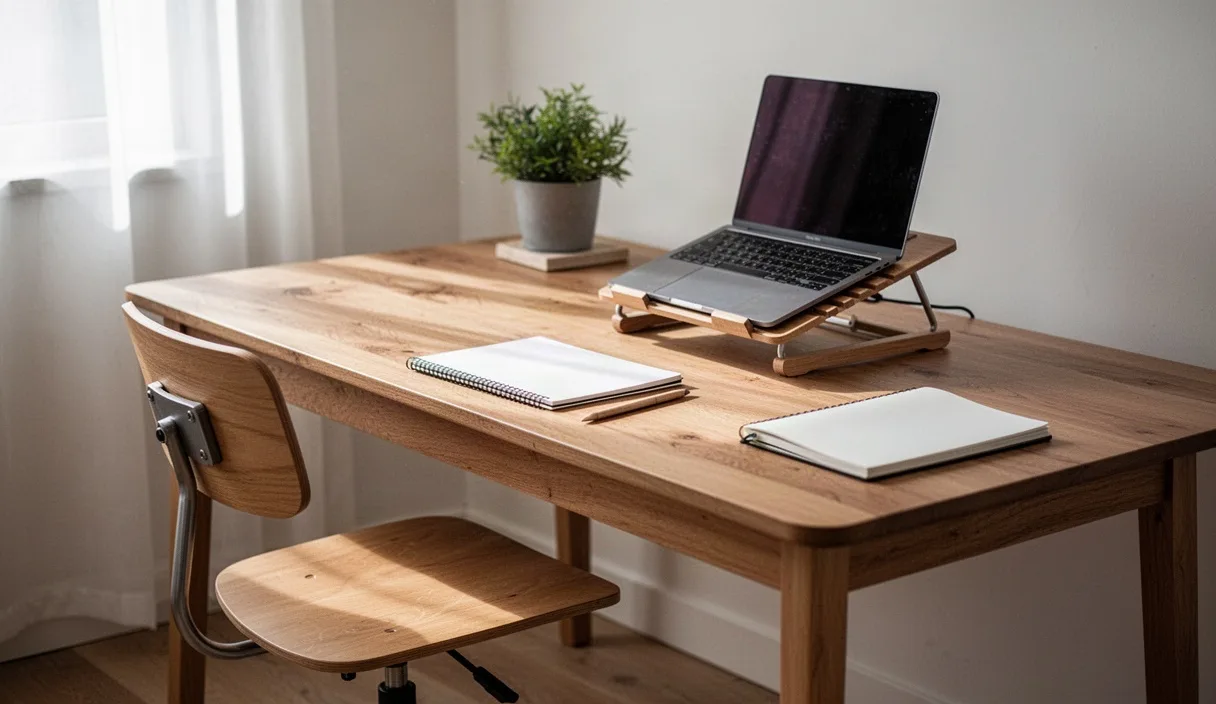
Stretching works best when paired with an ergonomic workspace that supports neutral posture. Begin by adjusting your monitor height. The top third of your display screen should sit at eye level when you are seated upright, roughly arm's length away. If you work from a laptop, place it on a riser or a stack of books and use an external keyboard and mouse. Working directly on a laptop keyboard resting on a standard desk forces the neck into persistent flexion, working directly against the benefits of your stretching routine.
Position your keyboard and mouse close enough that your elbows remain bent at approximately 90 to 100 degrees, hanging relaxed beside your rib cage rather than reaching forward. Adjust your chair height so your feet rest firmly on the floor with knees at or slightly below the level of your hips, which stabilizes the pelvis and supports the spinal curves above it.
These exercises are intended to relieve everyday postural strain and muscular fatigue. They are not a replacement for medical diagnosis or clinical treatment. If you experience numbness, tingling, or weakness radiating into your shoulders, arms, or fingers, consult a physical therapist, orthopedic specialist, or primary care physician. Similarly, if your back pain is sharp, worsens progressively, or does not improve after three to four weeks of consistent postural modification, seek professional evaluation to rule out disc pathology or underlying spinal conditions.