Artificial lighting from municipal street lamps, vehicle traffic, and home electronics alters the nocturnal baseline of modern living spaces. When you step into your bedroom after dark, ambient photons continue to interact with your nervous system even through closed eyelids. Choosing between altering your architecture with physical window treatments or donning a wearable barrier is one of the most immediate environmental decisions you can make for nightly rest. Both options address optical stimulation, but each presents distinct trade-offs in room climate, financial cost, and practical maintenance.
A window curtain system modifies the entire volume of a room, keeping illumination from washing over your skin, your nightstand, and the surrounding walls. An eye mask creates a micro-barrier directly over the ocular orbits, rendering room-level brightness functionally irrelevant to the retina. To select the right tool or combine them systematically, you must assess the precise light sources penetrating your room, your local climate requirements, and your individual sensitivity to sensory pressure against your face during the night.
The Biological Response to Ambient Evening Light
Human circadian regulation relies on specialized sensory cells embedded in the inner retina called intrinsically photosensitive retinal ganglion cells (ipRGCs). These cells express the photopigment melanopsin, which displays peak spectral sensitivity to short-wavelength blue light around 460 to 480 nanometers. When photons strike these cells, signals travel along the retinohypothalamic tract directly to the suprachiasmatic nucleus in the hypothalamus, the master pacemaker coordinating biological time. This signal directly governs the production of pineal melatonin, the hormone responsible for lowering core body temperature and facilitating sleep continuity.
The closed human eyelid is translucent rather than opaque. Thin ocular tissues filter incoming light, transmitting approximately 1 percent to 3 percent of short wavelengths and up to 14 percent of longer red wavelengths. As a consequence, ambient room illumination as low as 5 to 10 lux can register at the retinal layer during sleep. For context, 1 lux corresponds roughly to the illumination of a single candle from a distance of one meter, while a standard high-pressure sodium or LED street lamp shining through a sheer blind easily registers between 8 and 25 lux at the pillow surface.
Even low levels of chronic nighttime light exposure have measurable physiological consequences. Research demonstrates that sleeping in dim light between 10 and 40 lux increases autonomic sympathetic activity, manifesting as elevated resting heart rate and decreased heart rate variability compared to absolute darkness. Over repeated nights, this persistent sympathetic tone can fragment sleep architecture, diminishing the percentage of slow-wave deep sleep and rapid eye movement periods. When dealing with severe sleep onset or circadian rhythm disorders, a certified sleep specialist or neurologist should be consulted to diagnose underlying pathologies rather than assuming that environmental darkness alone will resolve clinical issues.
Evaluating Light Leaks Across Doors and Window Frames
Diagnosing optical infiltration requires a structured baseline assessment of your bedroom. Perform a zero-light audit during typical sleeping hours, roughly thirty minutes after local sunset. Turn off every interior light fixture, television, and mobile screen inside the room, then sit on your bed for five minutes to allow your eyes to complete initial rhodopsin regeneration and rhodopsin-based dark adaptation. Once your vision adjusts, scan the perimeter to identify primary infiltration points.
The most persistent offenders rarely stem from the glass pane itself; instead, they originate at the structural boundaries of the window casing and doorway:
- The Top Curtain Halo: Standard curtain rods positioned directly above a window frame create a horizontal gap of 2 to 4 inches. Light bouncing off exterior walls travels upward and casts an illuminated arc across the ceiling.
- Lateral Reveal Gaps: Panels that end at the edge of the glass rather than extending beyond the trim allow vertical beams of light to slice into the room along the walls.
- Sill and Floor Clearances: Fabric hanging higher than 1 inch above the floor or an interior sill allows rising reflective light from outdoor sidewalks to enter from below.
- Door Threshold Gaps: Interior doors often feature an under-door gap between 0.5 inches and 0.75 inches to accommodate airflow, drawing hallway and night-light illumination into the sleep zone.
To quantify these leaks systematically without professional laboratory equipment, hold a basic lux meter or a smartphone sensor calibrated against a stable source at your typical head resting position on the mattress. If your sensor reads above 0.3 lux in total room darkness, ambient light infiltration remains strong enough to challenge melatonin secretion. Alternatively, perform the simple paper test: hold a blank sheet of white printer paper at arm's length. If you can clearly discern its rectangular outline and corners after five minutes in the darkened room, your space contains sufficient scattered light to warrant physical intervention.
Blackout Fabric Types and Thermal Insulation Value
Window coverings categorized as blackout fall into two primary manufacturing groups: multi-pass coated textiles and tightly woven three-layer fabrics. Understanding their physical construction determines how well they darken your room, how long they last through wash cycles, and how they alter the thermal dynamics of your window glass.
Coated fabrics rely on a base substrate, usually polyester or a cotton blend, that receives multiple thin layers of acrylic or polyurethane foam spread directly across the outward-facing side. A two-pass fabric features a layer of dark pigment to stop light followed by a decorative white topcoat, blocking approximately 94 percent of incident light. A three-pass or "true blackout" fabric uses a white primer layer, a solid black core layer, and an outer white reflective layer, restricting up to 99 percent of outdoor illumination. These coated fabrics offer an estimated R-value improvement of 1.2 to 2.1 over single-pane or double-pane window assemblies, capturing a stagnant layer of air that reduces convective heat loss in winter and radiant heat gain in summer.
Conversely, triple-weave fabrics integrate a dense layer of black yarn sandwiched between outer decorative faces using high-density loom configurations. These lack the chemical rubberized backing of coated options, making them softer, easier to launder, and more resistant to peeling or cracking caused by direct solar UV exposure. Triple-weave options achieve substantial darkness, typically stopping 88 percent to 96 percent of incoming light depending on fabric weight, which generally ranges between 260 and 340 grams per square meter (GSM). However, triple-weave textiles have a lower thermal performance, offering an R-value addition closer to 0.6 to 0.9.
To eliminate the perimeter halo effect inherent to curtain panels, install a wraparound or "return" rod. These curved metal rods direct the fabric 90 degrees back to the drywall, eliminating lateral edge leaks. Hang the rod at least 6 inches above the window molding and ensure the panels extend at least 4 inches beyond the left and right borders of the architectural trim.
Eye Mask Materials: Silk, Cotton, and Foam Contours
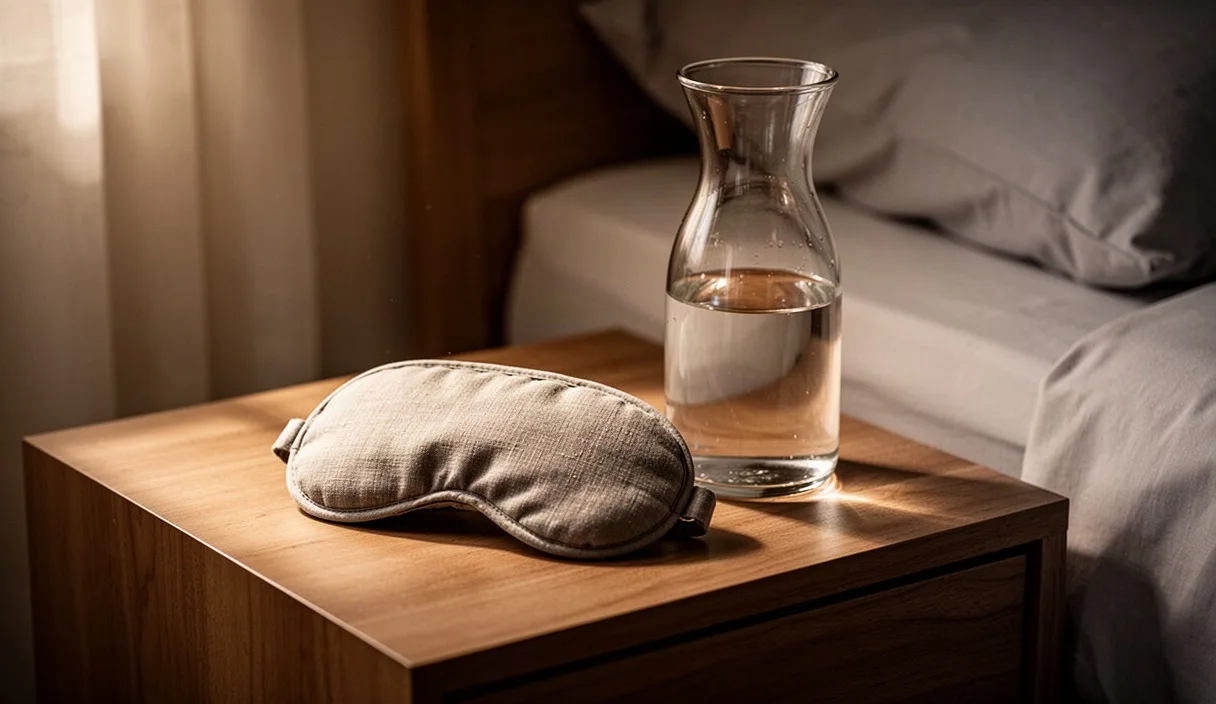
Personal light-blocking eye masks provide an immediate solution that bypasses room layout, rental restrictions, and structural gaps. The success of an eye mask relies entirely on facial ergonomics, pressure distribution, and material breathability against delicate periorbital tissue.
Mulberry silk remains an established standard for flat-profile masks due to its smooth surface texture and low coefficient of friction against facial skin. Silk fibers contain natural proteins with low moisture absorption properties compared to unrefined plant fibers, preventing the mask from stripping topical moisturizers or drying out the epidermal layer around the eyes during seven to eight hours of direct contact. The standard metric for silk durability and thickness is momme; aim for 22 to 30 momme fabric. A lower momme count (such as 16 or 19) degrades rapidly from scalp oils and nightly shifting, while counts above 30 can feel stiff and unyielding against facial curves.
Cotton provides a natural, highly breathable option favored by individuals prone to periorbital heat buildup or sweat accumulation. Woven organic cotton or brushed jersey adapts naturally to washing cycles, but standard flat cotton masks compress directly against the eyelids and eyelashes. This continuous contact can trigger rapid eye movement disturbances or cause mechanical irritation across the cornea, particularly for users with dry-eye syndrome or sensitive lash extensions.
To eliminate direct corneal pressure, contoured 3D eye masks use molded ethylene-vinyl acetate (EVA) or low-density polyurethane memory foam. These feature deep recessed cups around each ocular cavity, allowing the wearer to blink freely without eyelash contact. The primary mechanical challenge with foam contour masks is sealing the bridge of the nose. Look for designs incorporating an adjustable fabric baffle or a flexible wire insert over the nasal ridge. Without this contouring, upward light leaks through the nose notch will bypass the cup entirely.
Strap mechanics directly influence mask stability. Single thin elastic bands slide downward toward the earlobes or dig into occipital ridges, causing tension headaches. Dual adjustable straps or broad elastic bands backed by micro-hook-and-loop fasteners distribute pressure across the parietal bones without catching hair fibers or loosening midway through the night.
Managing Morning Light Exposure for Circadian Timing
While evening darkness encourages physiological rest, total morning darkness can introduce an unintended biological cost. The human circadian clock operates on an endogenous period slightly longer than 24 hours (averaging roughly 24.2 hours). The primary synchronizer that resets this clock each day is the sudden influx of blue-enriched sunlight entering the eyes during the first hour after waking.
Heavy blackout curtains that remain fully closed past your desired wake time prolong the production of melatonin and delay the morning surge of daily balance, a hormone vital for alert cognitive function. This delay often results in persistent sleep inertia, characterized by grogginess, slow motor responses, and mental fogginess that can linger for 30 to 90 minutes. To balance nightly darkness with morning entrainment, consider two practical approaches:
- Automated Track Motors: Motorized curtain tracks fitted with scheduled smart timers open your curtains 15 to 30 minutes before your alarm sounds, letting progressive natural daylight stimulate your retina gradually through closed eyelids.
- Strategic Partial Closing: If your room does not face direct street lamps or security spotlights, leave a 2-inch vertical gap in the curtains oriented away from your pillow, allowing ambient dawn light to enter the space without shining directly into your eyes.
Eye masks present a different morning challenge. If you wake up inside an opaque foam mask, your retinas receive zero lux until the physical moment of removal. Taking off a mask in an already illuminated room causes an immediate pupillary reflex and photophobic squinting. To mitigate this shock, remove the mask while keeping your eyes closed, pause for ten seconds to let scattered light penetrate your eyelids, and then open your eyes slowly. Follow this immediately by exposing yourself to daylight from an uncovered window or stepping outdoors for 10 to 15 minutes to firmly anchor your circadian rhythm.
Final Assessment Matrix: Cost, Ease, and Airflow
Choosing between structural curtain installations and wearable eye masks involves practical lifestyle parameters that extend beyond simple optical calculations. Airflow dynamics, living arrangements, and travel frequency dictate which approach delivers sustained value.
| Evaluation Criteria | Blackout Curtains (Full Setup) | Contoured Eye Mask |
|---|---|---|
| Initial Capital Cost | $80 to $320 per window frame | $15 to $45 per unit |
| Installation Complexity | High (stud finders, drilling, anchors) | None (ready out of the box) |
| Airflow Impact | Restricts cross-ventilation when closed | Zero restriction on ambient room airflow |
| Side-Sleeper Viability | Unrestricted (no facial interference) | Moderate (requires low-profile side edges) |
| Travel Mobility | Immobile (fixed to residential structure) | High (fits into carry-on luggage) |
| Maintenance Cycle | Launder or steam every 6 to 12 months | Hand-wash or delicate cycle every 7 days |
| Thermal Isolation | Adds R-0.6 to R-2.1 thermal protection | No room thermal insulation effect |
A major hidden factor in this choice is room ventilation. In residences without central heat pumps or air conditioning, sleeping with open windows is essential to dissipate body heat and clear carbon dioxide buildup. Heavy coated blackout curtains draped over an open window frame act as a windbreak, halting cross-breezes and driving room temperatures upward. Because core body temperature must drop by roughly 1 degree Celsius (1.8 degrees Fahrenheit) to initiate and maintain restorative deep sleep, trapping warm air behind heavy drapes can do more harm to sleep quality than minor light leaks. In these environments, an eye mask paired with an open window offers superior microclimate regulation.
Common Mistakes
Achieving sustained darkness often fails due to simple execution oversights. Avoid these common installation and maintenance missteps:
- Mounting Rods on Standard Brackets: Using factory curtain brackets that place the rod 3 to 5 inches outward from the drywall allows substantial peripheral light to cast across your sleeping area. Always choose wraparound rods or close-set brackets.
- Over-tightening Mask Straps: Pulling an eye mask strap too tightly creates sustained pressure against the temporal arteries and ocular tissue, leading to morning headaches and blurry vision from temporary corneal molding. The band should only exert enough pressure to prevent slipping.
- Ignoring Internal LED Displays: Spending money on premium drapery while leaving uncovered illuminated blue and green power LEDs on televisions, humidifiers, air purifiers, and charging bricks negates environmental darkness. Use dark light-blocking adhesive stickers on all bedroom appliance indicators.
- Neglecting Mask Hygiene: Dead skin cells, sebum, and sweat saturate mask linings quickly. Failing to wash your mask at least once per week fosters bacterial growth, which can provoke contact dermatitis, blepharitis, or acne around the orbital rim.
Actionable Setup Steps
Follow this systematic sequence to establish an optimal, light-managed sleep environment tailored to your budget and living situation.
- Quantify Your Infiltration: Complete the five-minute room audit tonight. Note whether light is arriving through exterior windows, internal door cracks, or device charging displays.
- Treat Micro-Sources First: Apply opaque vinyl stickers over all LED indicator lights on electronics. Place a silicone or fabric draft-stopper along the bottom of your bedroom door to seal hallway illumination.
- Assess Your Airflow Needs: If you rely on open windows for seasonal cooling, prioritize purchasing a high-grade 3D contoured eye mask with a recessed ocular cavity and adjustable nose wire rather than heavy drapery.
- Upgrade Structural Windows Correctly: If relying on curtains, purchase panels with a minimum 260 GSM rating or triple-pass backing. Measure the rod to extend 4 to 6 inches beyond the outer edge of the window trim on both sides, and mount the hardware 6 to 8 inches above the glass to stop the top halo effect.
- Establish a Morning Routine: If using blackout curtains, tie back or slide open the panels within ten minutes of rising to expose your eyes to morning light. If using an eye mask, remove it gradually before moving into bright morning conditions to help align your circadian rhythm.